


This post is partly the result of my discussions with our People practice leader and talent acquisition executive. ITILITE is at a phase of growth, where are looking for more engineering & product management bandwidth. And I had to think hard to write the various Job-Descriptions. So, I have tried to generalise it using my experiences from the last 2-3 stints. In case you’re interested to explore an Engineering Management role with ITILITE, please get in touch with me or write to careers{at}itilite.com
Engineering Leadership
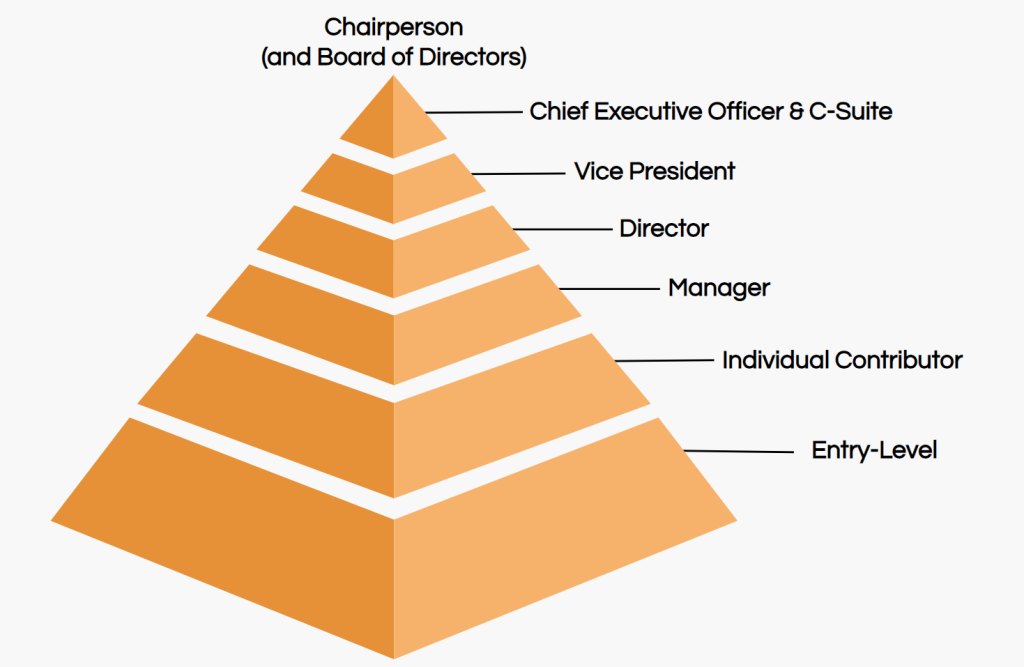
As apps are becoming increasingly omnipresent and in most cases, there is a startup behind them. Engineers make up to 70% of a tech startup’s workforce, there is an increasing need for managers who look after those developers. As a result, there is a rise in the number of engineering managers in recent years. Engineering managers are responsible for delivery teams that develop these “Apps”. The following is a very generalised version of what you could do in these roles and a possible career progression.
Engineer to Tech Lead/Lead Developer
The first step in your journey from an Individual Contributor(IC) to a management role. This could be a mix of people management, delivery management, process management etc, depending on the context of your organisation. In most organisations, it is a “technical mentorship” role with some aspects of people management, quality and delivery ownership.
Most Tech Leads are natural technical leaders. They are great engineers on their own, they were well respected by the engineers around them, they worked reasonably well with the team, they understood how the product/module was designed, built and shipped, they had a decent sense for making the right kinds of product tradeoffs and they were willing to do just enough project management and people development to keep the team/project humming along.
In this role,
- Most TLs would retain some independent deliverables in addition to anchoring and owning the deliveries of their team.
- Most of the team still works on the same module/feature or sub-system
- They do code & design reviews, suggest changes and have the final say for their modules.
- Together with the Product Managers, they “own” the feature/module.
We at itilite, call them Engineering Owners, much like Product Owners
Tech Lead to Engineering Managers
The next step in the Engineering Manager. In this role, you will be “Managing” a collection of inter-related modules/projects. In this role, the focus on timely delivery, people management and quality are higher than technical design & architecture. But, you are very much an Engineer and may be required to occasionally write quick hacks, frameworks for your developers to build atop.
The main difference is you will be responsible for the delivery of multiple projects in a related area. You will be expected to optimise the resources (Devs, Testers, etc.) available with you to maximise the outputs of your group, across multiple projects/modules
In this role, you’d be
- Expected to actively engage with the Product Management teams to define what needs to be built
- Defining how you will measure the outcomes of what your team is building and quantify the outcomes with metrics
- Ensuring quality, getting stakeholder alignment and signoffs
- Macromanage the overall deliverables of your group
The Pivot – Tech, Product, Solution Architect
The next step in your career gives you two options. One with people management, P&L accountability and other a purely technical role. If you’re planning for a pureplay technical role, some organisations have Staff Engineer, Principal Engineer etc. In essence, they are mostly a combination of Tech Lead+Architect type roles. Depending on your seniority/tenure and organisational context, you may be reporting to an Engineering/Delivery Manager, Director/VP or the CTO. In this rolw,
- You will work closely with Engineering Managers, Quality Assurance leads/managers and Product Owners to design the system architecture, define the performance baselines
- You will work with Tech Leads and Sr.Devs to drive the performance, redundancy, scalability among other stuff.
- You will be called into discussions/decide when the team can’t reach consensus on engineering choices
Engineering Manager to Director of Engineering
A Director of Engineering role is completely different. You now have multiple leads+managers, likely multiple projects within a general focus area of the organisation. This will mean there will be way more individual deliverables and project milestones than you can track in detail on a regular basis. Now you have to manage both people and projects “from the outside” rather than “from the inside”. You’ll likely start appreciating the metrics and dashboards, as they will help you in tracking those multiple projects and deadlines, schedules, overruns etc.
You have to make sure that your managers and leads are managing their resources appropriately and support them in their effort rather than managing individual contributors and projects directly.
Lots of great technical leaders have difficulty making this transition.
While being an engineering lead/manager is certainly managing, it’s type of managing from “within the project” is much easier than “managing from outside the project” and as a director, you almost always have to manage multiple people and projects “from the outside”.
Also, as a director, you will be responsible for a number of aspects of the culture, such us
- What kind of people are you hiring, setting responsibilities and workload expectations,
- What is the team(s) doing for fun, how do they interact with other functions
- What kinds of performance is rewarded/encouraged vs punished/discouraged.
Now, moving to some serious responsibilities, you may be the first major line of responsibility for what to do when things does not work,
- an employee not working out,
- a project falling behind,
- a project not meeting it’s objectives,
- hiring not happening in time, etc…
While most of these things are the direct responsibility of the engineering manager, the engineering manager is usually not left to face these issues alone, they work on it with the director and the director is expected to guide the process to the right decision/outcome.
I’ve seen people who were great technical leaders and good engineering managers who did not enjoy being a director at all (or weren’t as good at it) because it was a whole different type of managing bordering the administration.
Director to Vice-President
The VP of Engineering is the executive responsible for all of engineering. Development, Quality, DevOps and partly to Security and Product Management as well. While both the engineering manager and director of engineering have managers who themselves have likely been engineering managers and directors before, the VP may work for the CEO (in an early stage Startup or a smaller company) who has never been a VP of Engineering before.
A large company may have multiple levels of VPs, but in most cases, you work for someone who hasn’t been a VP of Engineering or doesn’t actually know how to do your job. This means, there simply is no first-hand experience from your Manager, that you can rely on to solve your problem. The first time you step into that role and realize that, it’s a sobering thought. You’re a pretty much on your own to figure things out. Not only are you completely responsible for everything that happens in the engineering organization, but when things aren’t going right, there’s pretty much no help from anywhere else. You and your team have to figure it out by yourselves. Many successful VPs eventually come to like this autonomy, but it can be a big adjustment when moving from director to VP.
At the director level, you can always go to your VP for help and consulting on difficult issues and they can and should help you a lot. At the VP level, you may consult with the executive team or the CEO on some big decisions, but you’re more likely talking to them about larger tradeoffs that affect other parts of the company, not how you solve issues within your team.
As a VP, you are primarily responsible for setting up processes and procedures for your organization to make it productive:
- Team/Project tools such as bug system, project tracking, source code management, versioning, build system, etc.
- Defining/improving processes to track, monitor and report on projects.
- Defining processes to deal with projects that run into trouble.
- Hiring: How you hire? What kind of people do you hire? how do you maintain the quality of new hire?
- Firing: When someone isn’t working out, how do you fix it: reassignment, training, performance plan, transfer, firing?
- Training: How does your team get the training they might need, it could be hard-skills, soft-skills or managerial
- Rewards: How do you reward your top individual contributors and for your top managers?
You may be part of the Leadership “Council” or participate regularly in business discussions that may or may not concern your department directly. In a startup, you are often “the” technical representative on exec staff. You help craft the strategy of the business. You are relied upon for technical direction of the company (sometimes with the help of a CTO).
As a VP, you are expected to understand many important aspects of other departments, what is important to other departments and how your department serves or interacts with or depends upon other departments. Two classic example might be,
- Sales depending upon certain product features/capabilities being delivered in a given timeframe to be able to convert a prospect.
- Customer success depending upon certain product fixes being delivered in a given timeframe.
As a VP, you will participate in the setting of these timeframes and balancing these against all the other things your department is being tasked to do.
—
As you can see, Engineering Management/Leadership is a very interesting career option. We have multiple opening across Product and Engineering functions at ITILITE. Please see if any of these roles interest you.